Topf Ratgeber

Pot Guide

Discover the world of cookware with Fissler's comprehensive cookware guide. Here you'll find everything you need to know about selecting, caring for, and using pots, pans, and more, so you can make the best choice for your kitchen. Find inspiration, helpful tips and tricks, and the quality features of good cookware.

In our comprehensive cookware guide you will find all the answers you are looking for!

A comparison of different pot types and materials

Stainless steel pots: durable and versatile

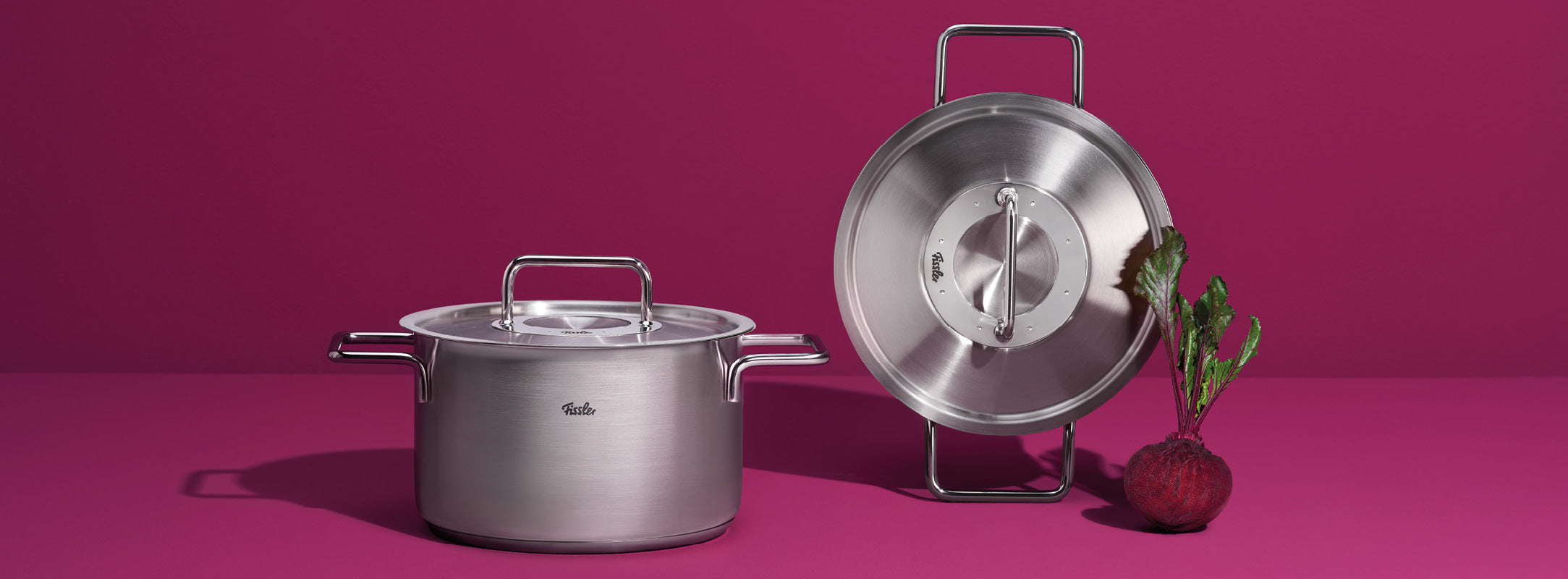
Fissler stainless steel pots are made of high-quality, rust-free 18/10 stainless steel and are extremely robust. They are ideal for everyday cooking and boast even heat distribution. Thanks to their high heat resistance, they are suitable for boiling, braising, and steaming a wide variety of dishes. They are also dishwasher-safe and particularly easy to clean.

Stainless steel pots are particularly suitable for:

  • Pasta, rice and vegetables
  • Soups and stews
  • Meat dishes and braised dishes

PTFE-coated pots: Non-stick for delicate foods

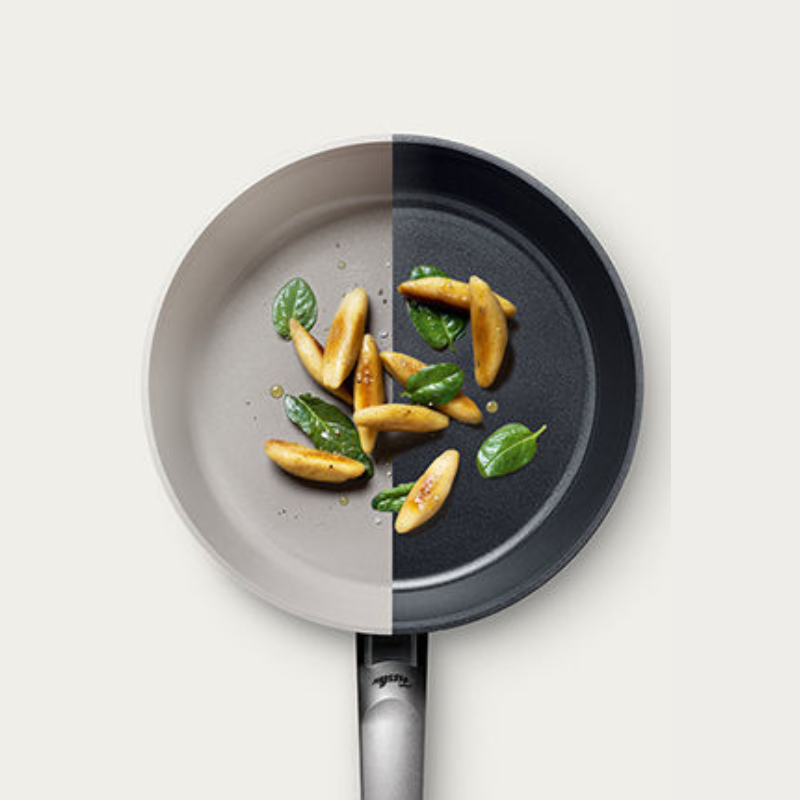
Fissler pots with a PTFE non-stick coating allow for low-fat cooking because nothing sticks. They are ideal for delicate foods and prevent burning. The non-stick surface makes them particularly easy to clean. To ensure the coating lasts a long time, it is recommended to use wooden or silicone utensils and avoid high temperatures.

PTFE-coated pots are particularly suitable for:

  • Milk and egg dishes
  • Creamy sauces and pudding
  • Gentle cooking of vegetables

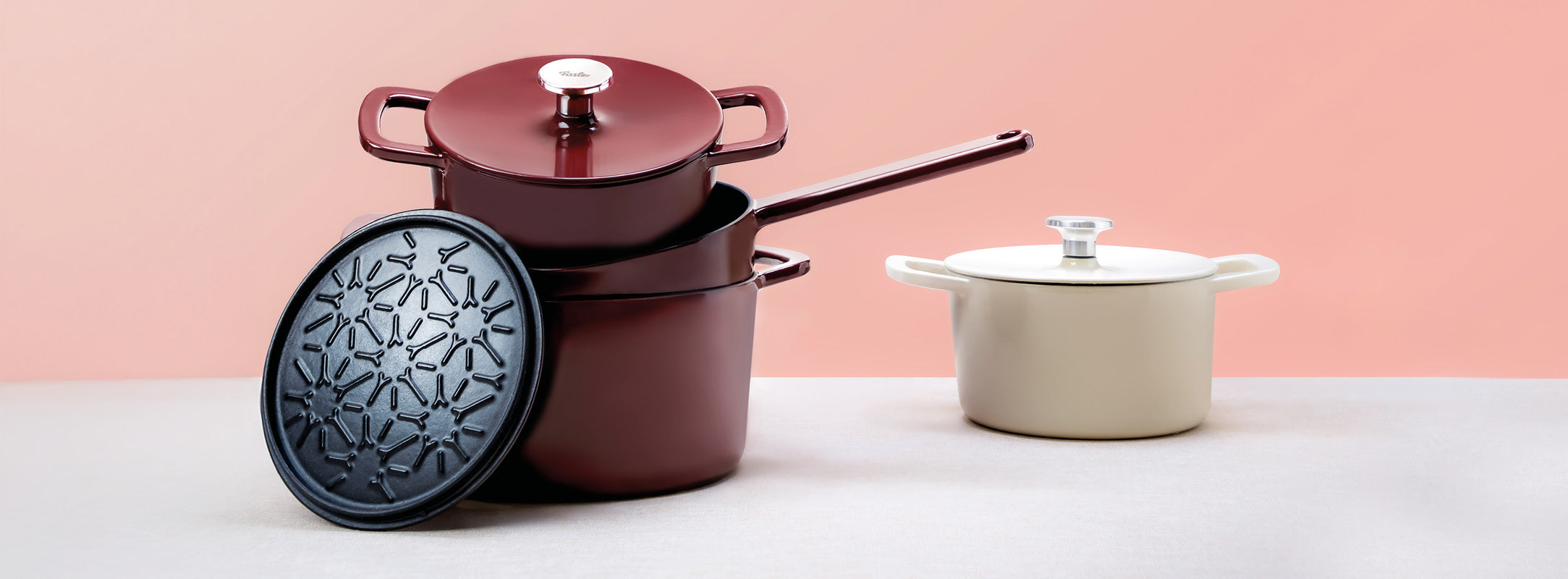
Cast iron pots: Perfect for slow braising

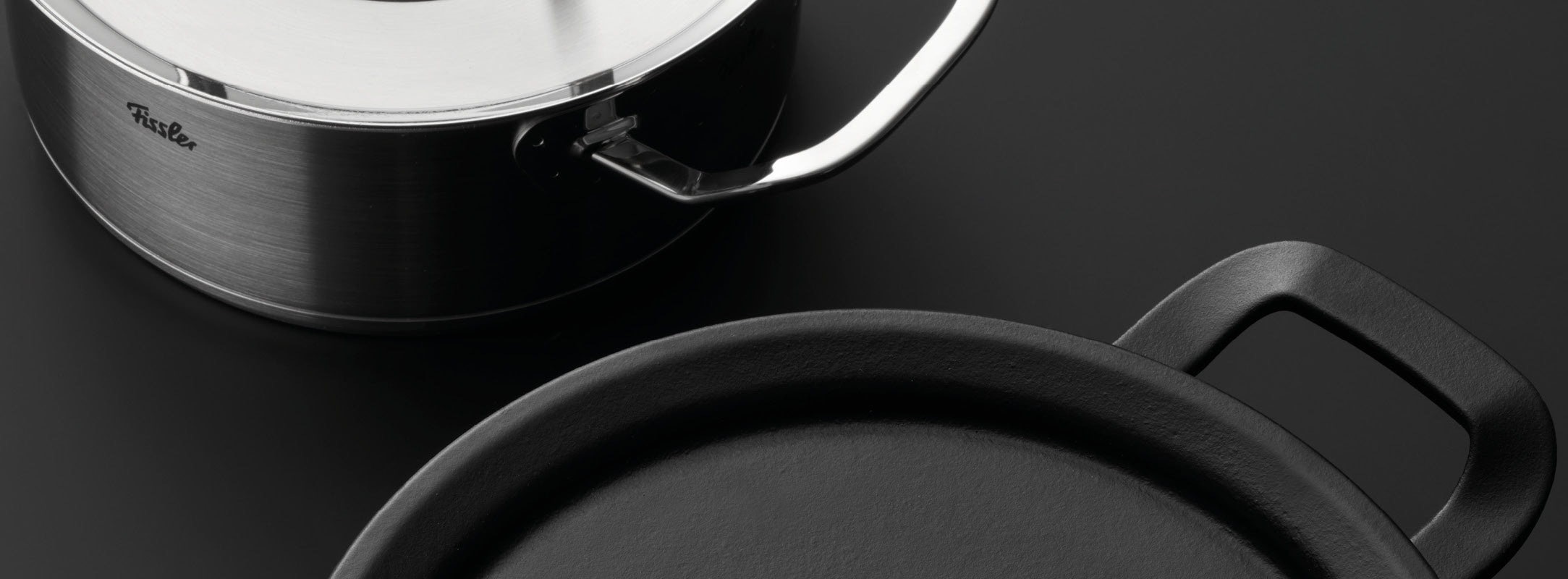
Fissler cast iron pots are known for their excellent heat retention. They distribute heat evenly, ensuring optimal braising and cooking results. Thanks to their robust construction, they are extremely durable and develop a natural patina over time, which improves their non-stick properties.

Cast iron pots are particularly well suited for:

  • Braised dishes such as goulash or coq au vin
  • Baking bread in the oven
  • Slow simmering and frying at low temperatures

Which pot is suitable for which dish?

Roasting pan – For braised dishes and roasts

Roasting pans and casseroles are suitable for preparing delicious braised dishes on the stovetop and in the oven. Besides braising, these types of pots can also be used for gentle steaming and even baking.

Casseroles – Perfect for sauces and small dishes

Thanks to their low sides, casseroles are ideal for sauces, small vegetable dishes or gently braising food.

Milk pots – specially designed for delicate liquids

With their high rim and often a special spout, milk pots are perfect for heating milk or preparing fine creams and sauces.

Sauté pans – For fine searing and reductions

The rounded edges and flat shape make sauté pans perfect for tossing vegetables, reducing sauces, or gently frying.

Soup pots – For stews and large quantities

Thanks to their large volume, soup pots are ideal for soups, stews and the slow simmering of broths.

Spaghetti pots – For pasta and large quantities of water

With their high sides and often integrated sieve insert, spaghetti pots make cooking and draining pasta easier.

Vegetable pots – Perfect for cooking while preserving vitamins

These pots are ideal for gently steaming or cooking vegetables, often with a suitable steamer attachment.

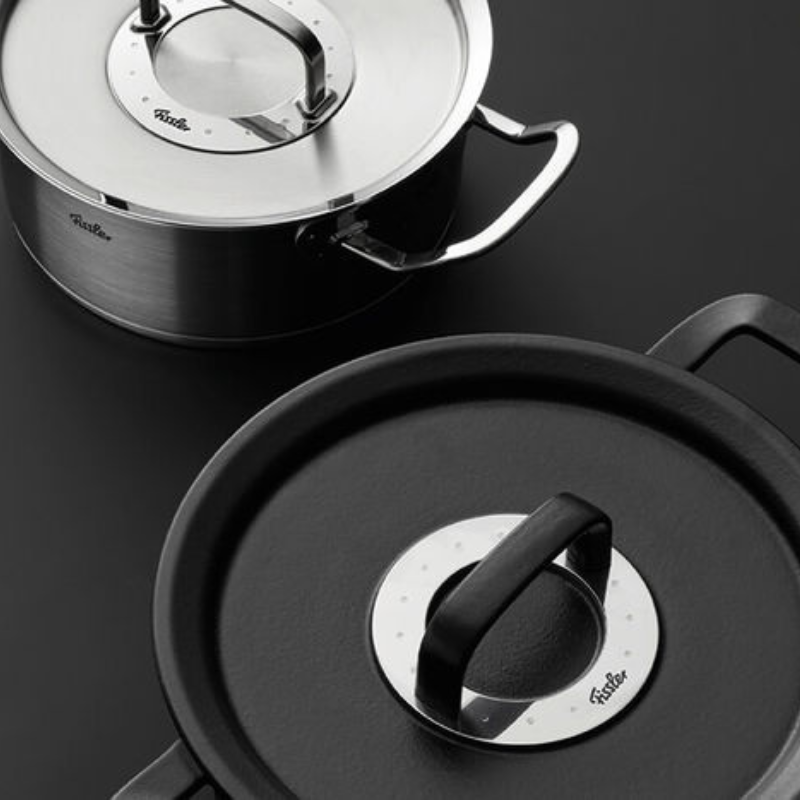
Not all pots are created equal.

Quality features of high-quality pots

When choosing a new pot, the most important factors are the pot body, base, lid, and handles.

AST_SA_1891651;bc78dd8197ed4ea77f9e427fe9a477fb;SETI_1179901

The pot body

A good pot is heavy and robust. Ideally, it should be made of high-quality stainless steel, identifiable by the designation 18/10 (18% chromium, 10% nickel, 72% steel). This type of steel is rustproof, particularly easy to clean, hygienic, and dishwasher-safe.

Conical pot shapes allow for space-saving stacking (e.g., the Fissler Phi Collection series). In good pots, the base and sides are firmly connected without any gaps. The transition from the base to the sides should be rounded on the inside, so that cooking spoons or whisks can easily reach all parts of the pot.

The ground

High-quality pot bases are made of stainless steel and contain a fully encased aluminum core. The aluminum acts as an important heat conductor and should not be exposed, as it can leach out in the dishwasher, causing white spots on the base. Thick bases with an aluminum core ensure optimal heat absorption, distribution, and retention. The pot base must always lie flat on the cooktop after heating – this saves energy and time while cooking. Always check the pot's suitability for your cooktop type, as not every pot is induction-compatible, for example.

AST_2277153;08a78e007600e70077bbac041b055b0f;SI_1091065

The lid

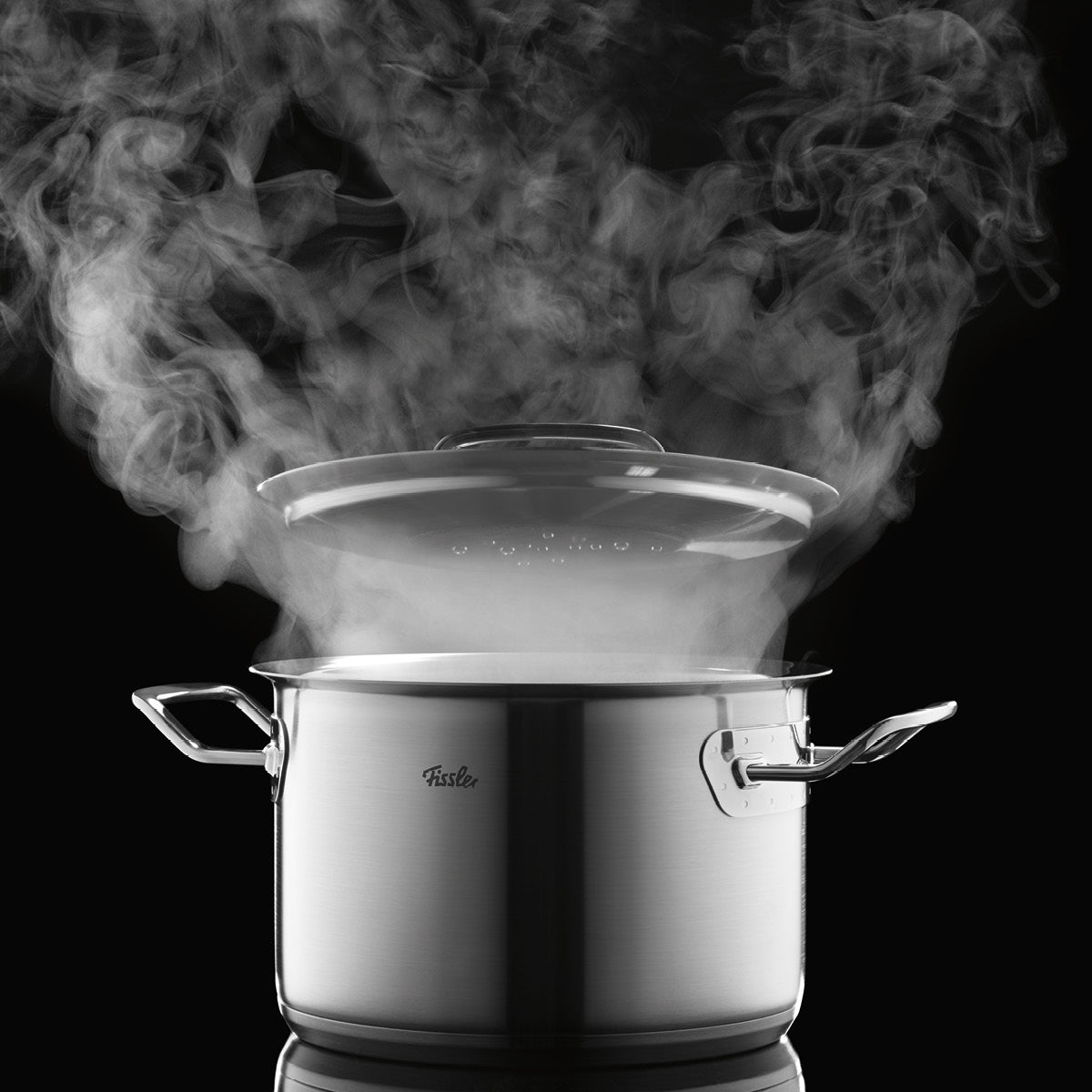
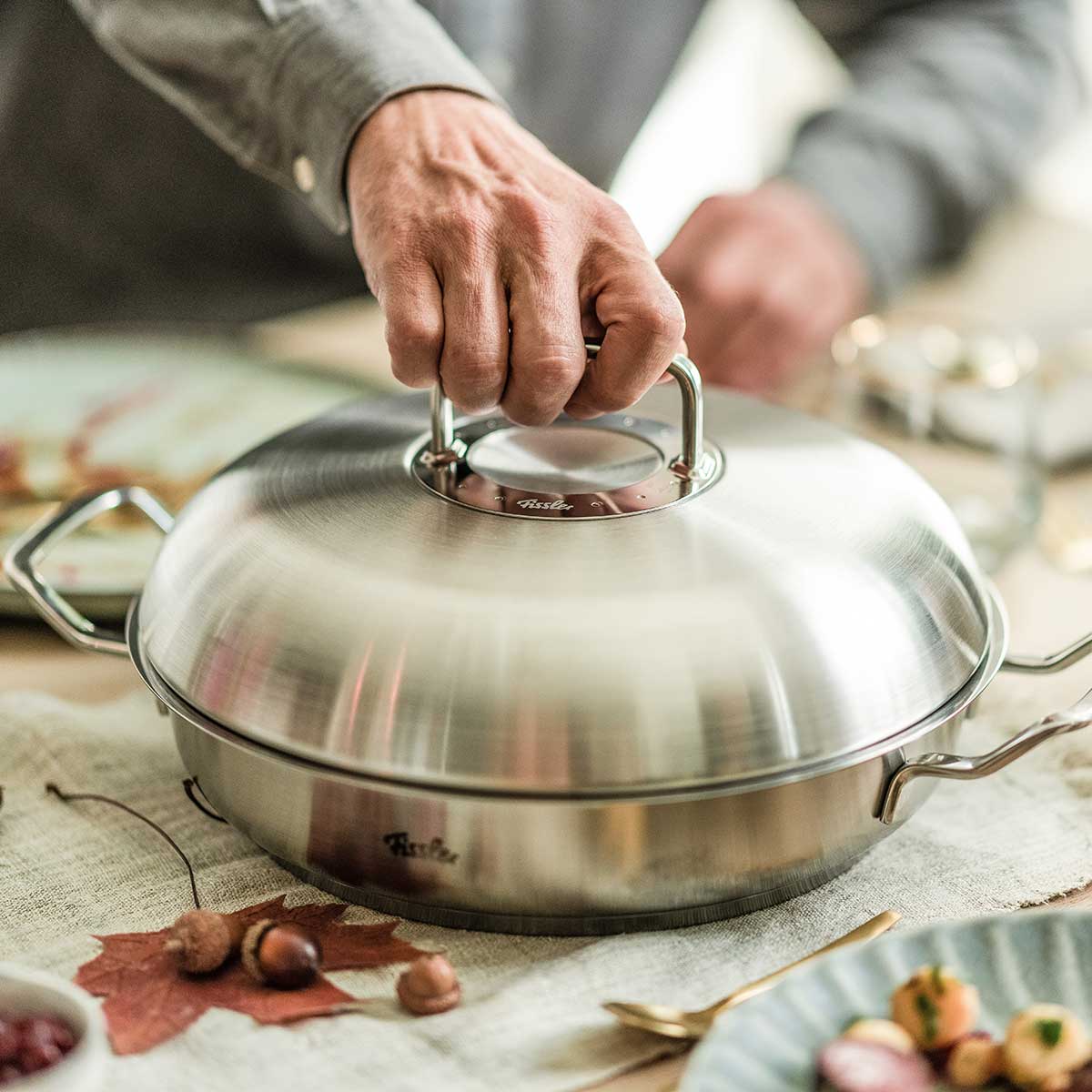
Tightly fitting lids keep heat and liquid in the pot. This preserves flavors and saves energy. Glass lids allow you to keep an eye on the food. There are also lids that are concave, meaning they curve inwards, so that rising steam drips back into the pot, making the food even more flavorful and succulent (for example, on the Fissler Original Profi Collection®).

The handles

You can usually choose between stainless steel and plastic for the handles. It's important that the handles are firmly attached to the pot body, fit comfortably in your hand while cooking, and don't get hot. Stainless steel handles are dishwasher and oven safe.
Plastic handles are not suitable for oven use due to the high temperatures (max. 80°C). While dishwasher cleaning is possible, the colors may fade over time. Therefore, pots with plastic handles should only be washed in the dishwasher occasionally, not regularly.

Practical equipment extras

If the basic elements such as base, handles and lid are right, the different pot series offer additional extras that make cooking even easier:

  1. Integrated lid rests allow the lid to be inserted into the rim or handle of the pot. This keeps your hands free while stirring and seasoning, allows condensation to drip into the pot, and keeps the stovetop clean (for example, the Phi Collection series).
  2. Practical pouring function: Some pots have an integrated pouring function that allows you to pour water when the lid is on. This eliminates the need for cumbersome handling of dish towels, pot holders, or sieves.
  3. A wide pouring rim ensures drip-free and accurate pouring. The hob and worktop stay clean.
  4. A measuring scale on the inside of the pot allows for convenient dosing of liquids. There's no need to wash separate measuring cups.