
Messertypen

Types of knives

The right knife for every purpose

A good knife will effortlessly cut through thick and thin with you. At least, that's the case if you've chosen the right knife. The wrong blade is more likely to damage the food being cut – and put the cook in a bad mood. To prevent exactly that from happening, we'll now guide you through the variety of different knife types.

These knives are essential for your basic equipment.

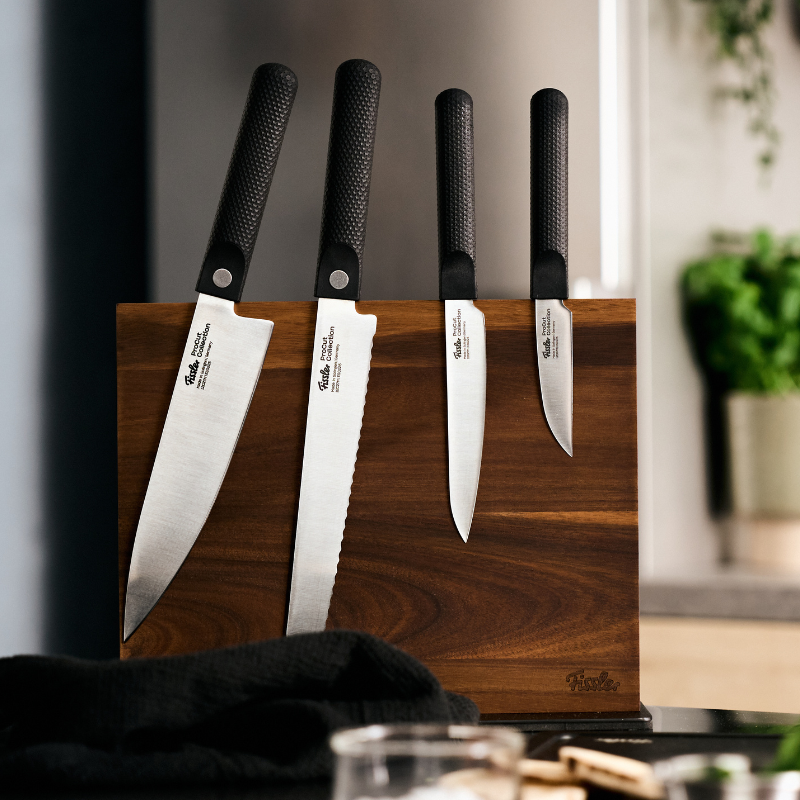
A classic basic set of equipment consists of:

  • 1 chef's knife 20 cm
  • 1 paring knife
  • 1 Santoku knife

Depending on requirements or cooking preferences, this can of course be supplemented with a smaller chef's knife, bread knife or a meat knife.

All knife types at a glance

The versatile all-round knife

Chef's knife

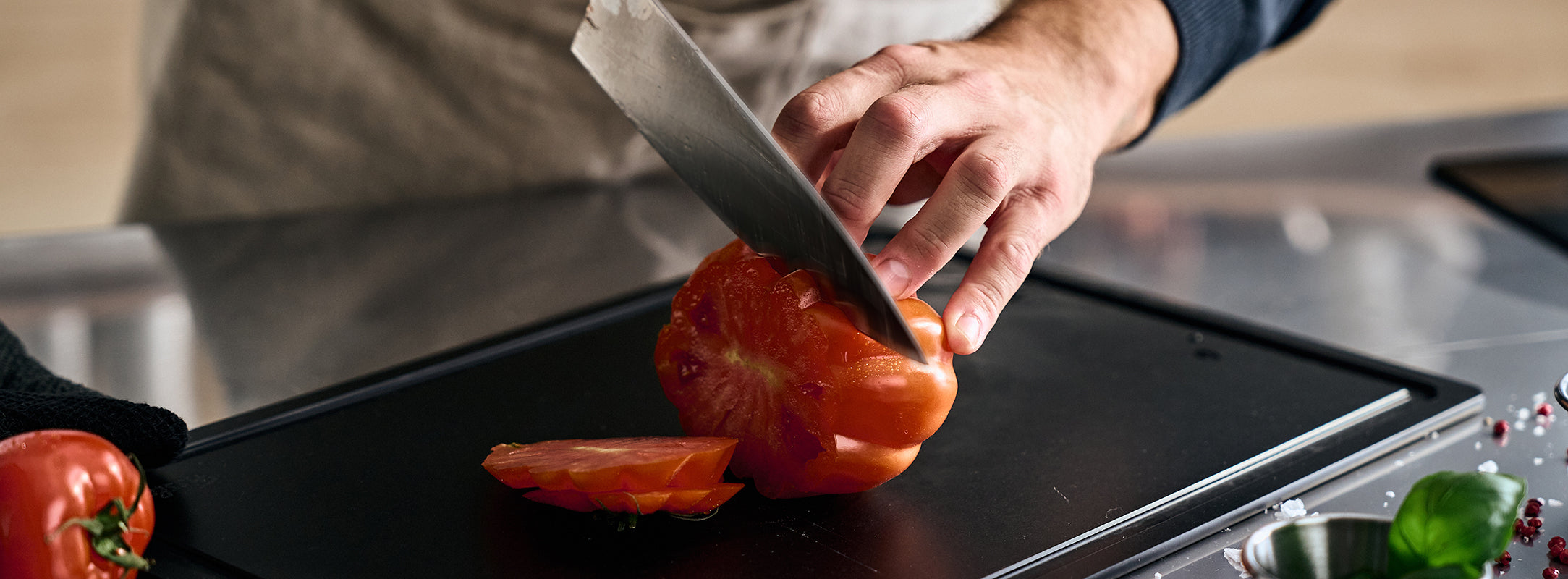
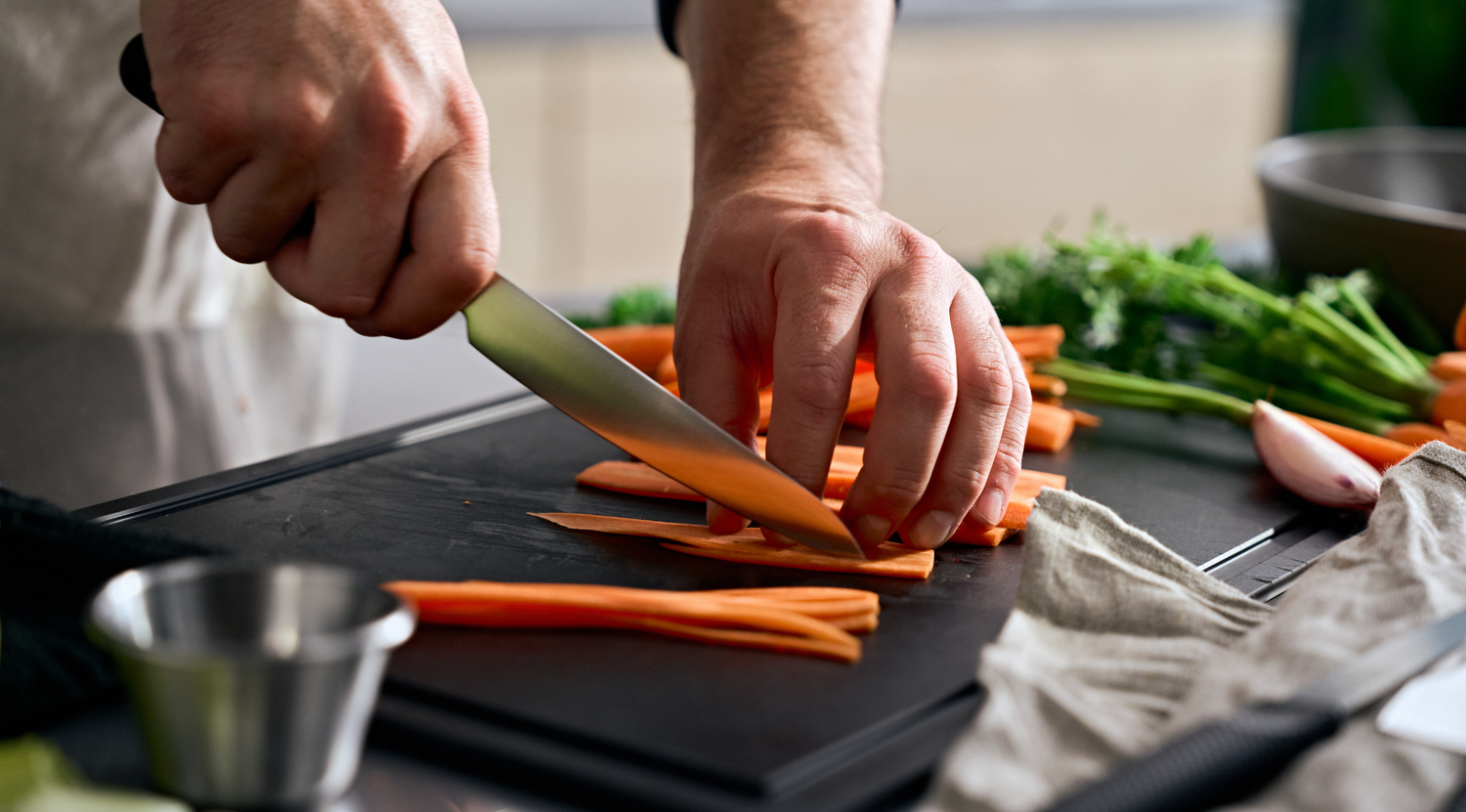
The chef's knife, available in 20cm and 16cm lengths, is an all-purpose knife with a long, wide blade. Therefore, it is perfect for cutting vegetables, meat, and fish. The sharp tip of the chef's knife also makes it ideal for precise cutting tasks.

  • All-purpose knife with a long, wide blade
  • Ideal for weighing and cutting meat, fruit, vegetables and fish.
To the knife

The Japanese multi-purpose knife

Santoku knife

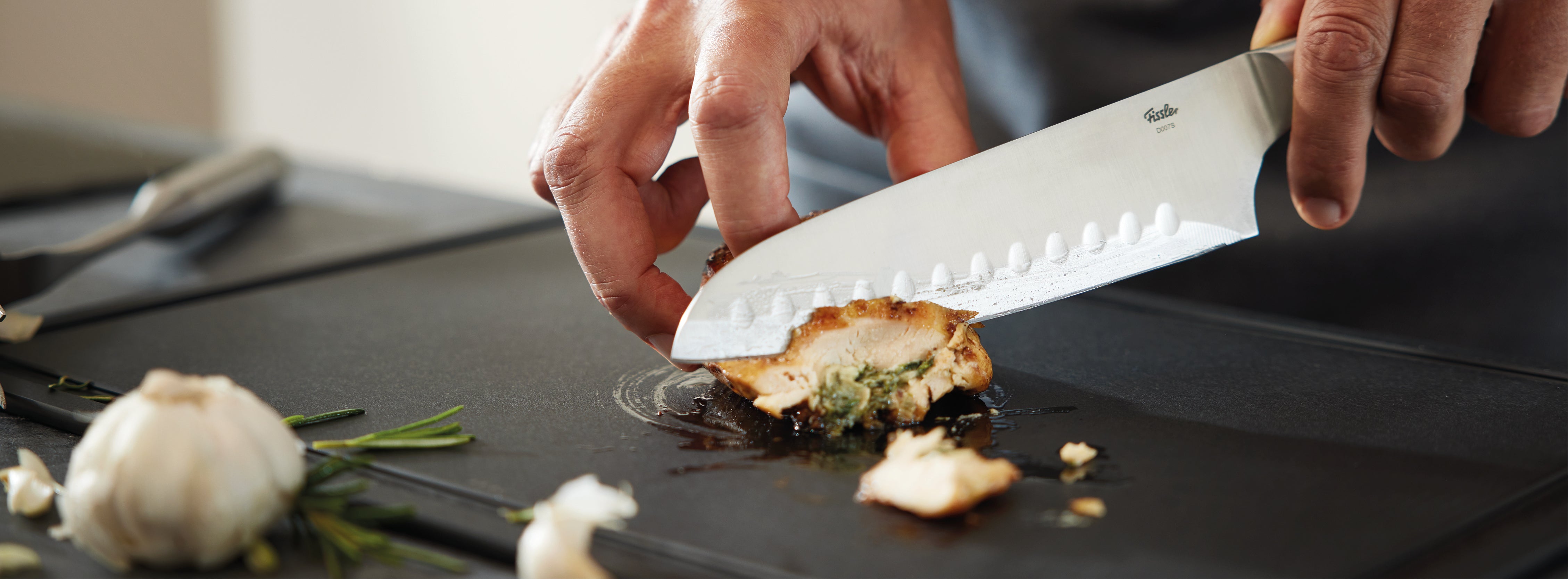
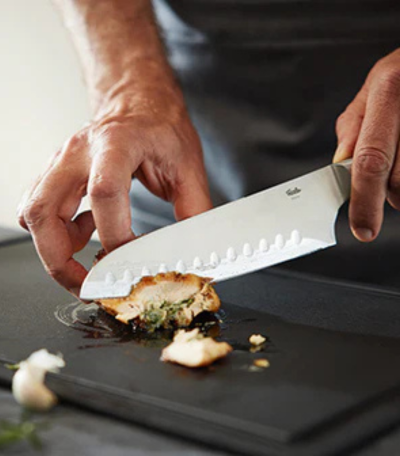
Santoku knives originated in Asian cuisine and are the Japanese version of the chef's knife. This versatile Japanese knife, with its wide blade and characteristic, slightly curved profile, is ideal for cutting meat, fish, and vegetables.

  • Japanese multi-purpose knife with a wide blade and characteristic, slightly curved blade profile.
  • Ideal for cutting meat, fish and vegetables
To the knife

For fruit and vegetables

vegetable knife

With its slightly shorter blade and curved back, the vegetable knife allows you to effortlessly cut through any type of fruit and vegetables.

  • Small, handy knife with a straight edge and curved blade spine
  • Ideal for cleaning, chopping and decorating fruits and vegetables
To the knife

For fine and delicate work

Universal knife

The utility knife is a small knife with a slim blade, making it particularly suitable for fine and delicate tasks in the kitchen. Its small blade allows for precise cutting and peeling. It is ideal for chopping onions and herbs, and for larding lean meat and poultry.

  • Small knife with a slim blade
  • Ideal for chopping onions and herbs, as well as for larding lean meat and poultry.
To the knife

With serrated edges for everything with a hard crust

bread knife

Most people will be familiar with the shape of a bread knife: The sharp serrated blade cuts through any pastry with just a few strokes, especially or only if it has a double-sided serrated edge.

  • Large knife with a coarse serrated edge
  • Ideal for cutting bread and crispy roasts, as well as for slicing fruits and vegetables with hard skins.
To the knife

Ideal for herbs and vegetables

Chinese chef's knife

The Chinese chef's knife is the traditional knife of Chinese cuisine. It is ideal for cutting and chopping herbs and vegetables and for transporting ingredients. Despite its cleaver shape, it is not suitable for cutting hard bones and cartilage!

  • Traditional Chinese knife
  • Ideal for cutting and chopping herbs and vegetables, for transporting ingredients (despite its axe shape, not suitable for crushing hard bones and cartilage!)
To the knife

Ideal for carving and paring

meat knife

The meat knife is a semi-flexible knife with a narrow, long blade and a particularly sharp tip. It is ideal for carving roasts as well as for peeling and cutting all types of meat.

  • Semi-flexible knife with a narrow, long blade and a particularly sharp blade tip.
  • Ideal for carving roasts as well as trimming and cutting all kinds of meat.
To the knife