








Kleine Kräuterkunde Thymian

A brief guide to thyme herbs

Chives, parsley, basil – the usual suspects on the windowsill are easily identified. But what does thyme actually look like, and what does it go well with? We'll explain what this unassuming all-rounder can do.

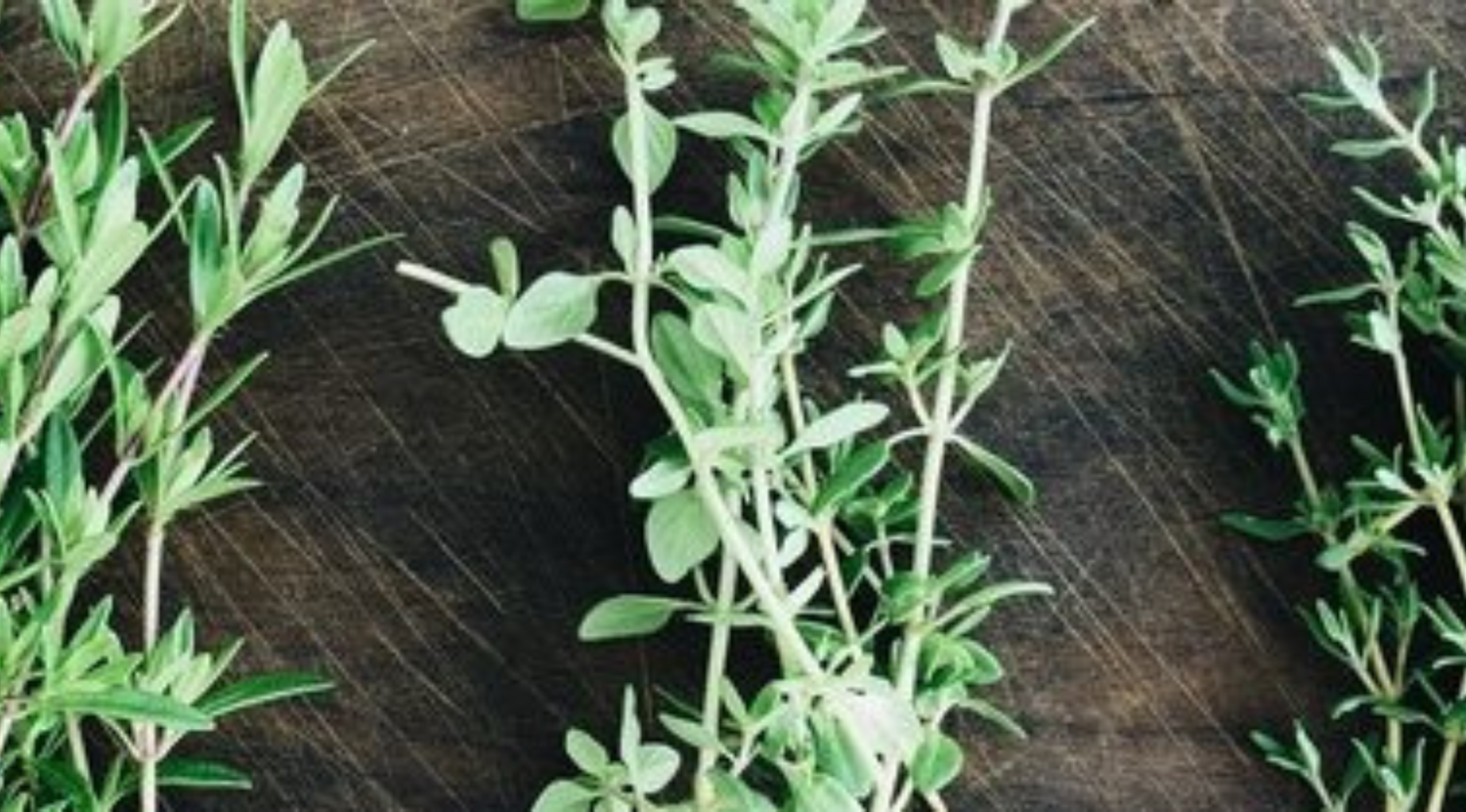
Thyme, or wild thyme as it's still called in some older cookbooks, has been known in Central Europe since the Middle Ages. This low shrub with its matte green, slightly pointed leaves grows low in sunny spots and is only noticeable for its delicate, pale lilac flowers in midsummer. Undemanding as it is, it doesn't need much attention in the garden or on a windowsill, just plenty of light. Yet it contains a wealth of aroma and important medicinal compounds that are still used today.

Mediterranean cuisine: Not without thyme!

Thyme is probably best known as an ingredient in the spice blend "Herbs of Provence": here, it appears crumbled and dried alongside thyme, marjoram, savory, lavender, and rosemary, adding a touch of southern flair to dishes like ratatouille, braised meats, and potatoes. It also works wonderfully on its own, and especially in summer, it's a welcome addition to grilled zucchini, eggplant, and peppers. The leaves can either be crumbled from the stem or added whole and removed later. And of course, no homemade tomato sauce would be complete without those small, intensely flavorful thyme leaves.

Effective against colds and cramps

The reason for its strong, distinctive flavor is the essential oils it contains, specifically thymol. It has antibacterial and antifungal properties – so potent, in fact, that the Egyptians used thyme extracts to preserve their mummies. Nowadays, its expectorant properties make it a popular remedy for respiratory ailments such as colds and bronchitis. Brewed as a tea or boiled down into a syrup with honey, it can save many a trip to the pharmacy.

Dried, fresh and as an oil: Thyme in its various forms

Thyme is most often sold in supermarkets crumbled and pre-packaged form. This allows it to keep for a long time, but it loses some of its aroma over time. Whole, dried thyme is much more intense, as the oils are preserved and reactivated upon contact with cooking liquids. However, it's still best and most delicious when eaten fresh from the windowsill, straight from the garden to the plate.