




Richtig schneiden

Cut correctly

It's truly impressive what professional chefs can do with their knives: snip, snip, chop, chop – and the onion is finely diced, the fish filleted, the meat sliced. It's all a matter of practice, because proper cutting skills are something that needs to be learned.
Here are the most important basics:

substrate

A good cut starts with the surface it's made on. Large cutting boards made of wood or plastic are recommended, as they protect the knife's edge. Materials like stone, glass, marble, or metal, on the other hand, dull the blade.

Security

If you don't want to cut yourself, always use sharp knives. This way, you need less force when cutting and minimize the risk of slipping. Also, always make sure to prepare food that needs to be chopped properly and, above all, securely. Wobbly food is always dangerous.

hands

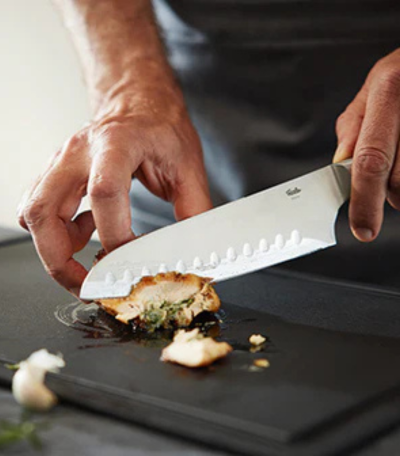
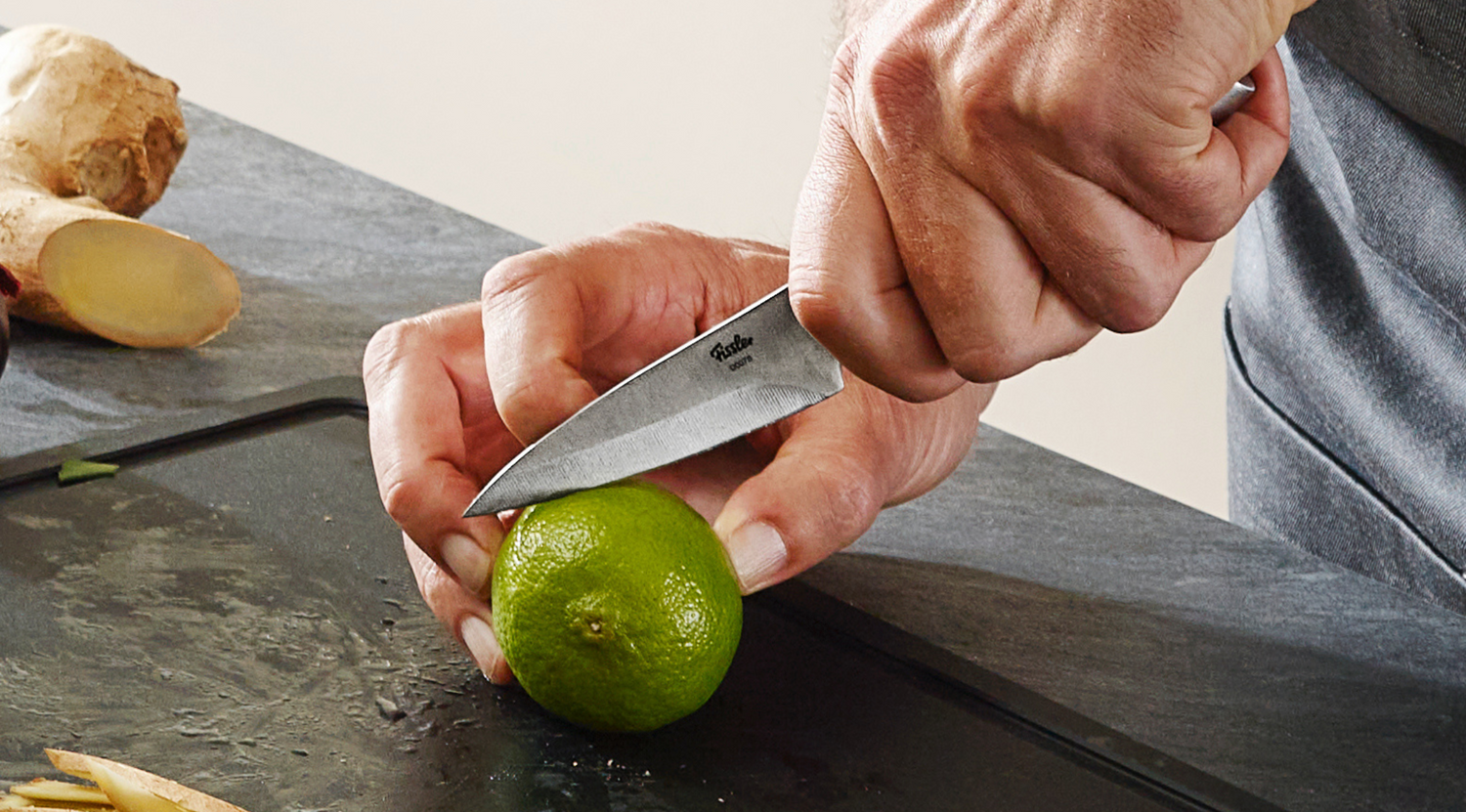
One hand holds the knife. The other holds the food being cut: the thumb and little finger grip it from the outside, while the middle, curled fingers hold it firmly from above. For better cutting control, the knuckles of the middle fingers can also be pressed against the knife blade. But be careful: keep your fingertips away from the danger zone! Always pull your thumb and little finger back behind the cutting edge.

The cradle cut

The most effective and elegant cutting technique is the rocking motion with a chef's knife. The technique is simple but requires a little practice. Always keep the tip of the knife on the board while cutting. Lift the middle part of the blade over the food in a rocking motion and, pushing forward and downward simultaneously, slice it into thin strips, strips, or cubes. After the third or fourth onion or carrot, you'll be rocking at a comfortable and quick rhythm and will continue to improve. Very important: Cut cleanly, don't crush or chop. Otherwise, liquids will be released that are meant to release their flavor during cooking.

Long cuts

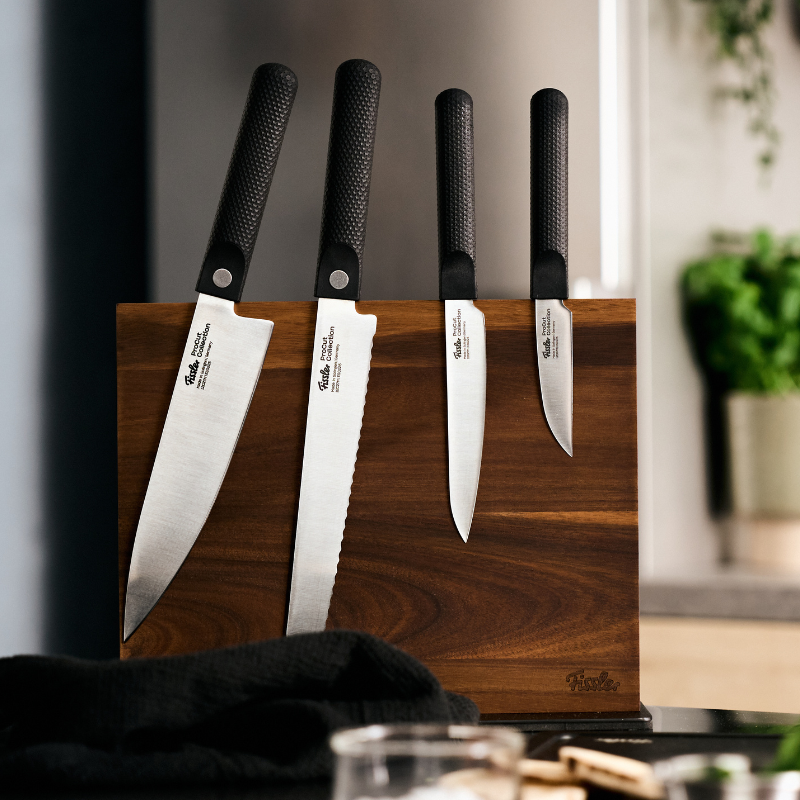
Soft and delicate foods like poultry, ham, or salmon should be cut with long, continuous strokes towards your body. Be sure to use the entire length of the blade. Short, jerky movements will damage the food. Use a knife with a sufficiently long blade. Also, the blade shouldn't be too wide, otherwise thin slices may stick.


Our tip: Knives with a hollow-ground edge.

Cut vertically

When cutting firm vegetables, apply even pressure from top to bottom. Always use the back part of the blade, as this allows for the most effective application of force.

cut bread

First, use the serrated blade to cut through the hard crust of the bread. Once you've cut through the crust, be careful not to crush the soft crumb. Instead, keep cutting until the slice falls off the loaf. This should be easily achievable with 3 to 4 clean cuts, using the full length of the blade.

Filleting

You probably don't fillet fish often. But from now on, you'll be a pro. First, use the filleting knife to cut off the head. Then, divide the fish along the backbone from tail to front. Thanks to the flexible blade, the filleting knife glides effortlessly through the fish. Next, turn one half over, lift the backbone, and remove it completely. Then, make an incision in the fillet from the tail end and run the knife along the skin. Finally, separate the fillet from the skin. And because it was so easy, let's do it again with the second half.