

So funktioniert Druckdampfgaren

This is how pressure steam cooking works

Pressure cooking in a pressure cooker explained briefly

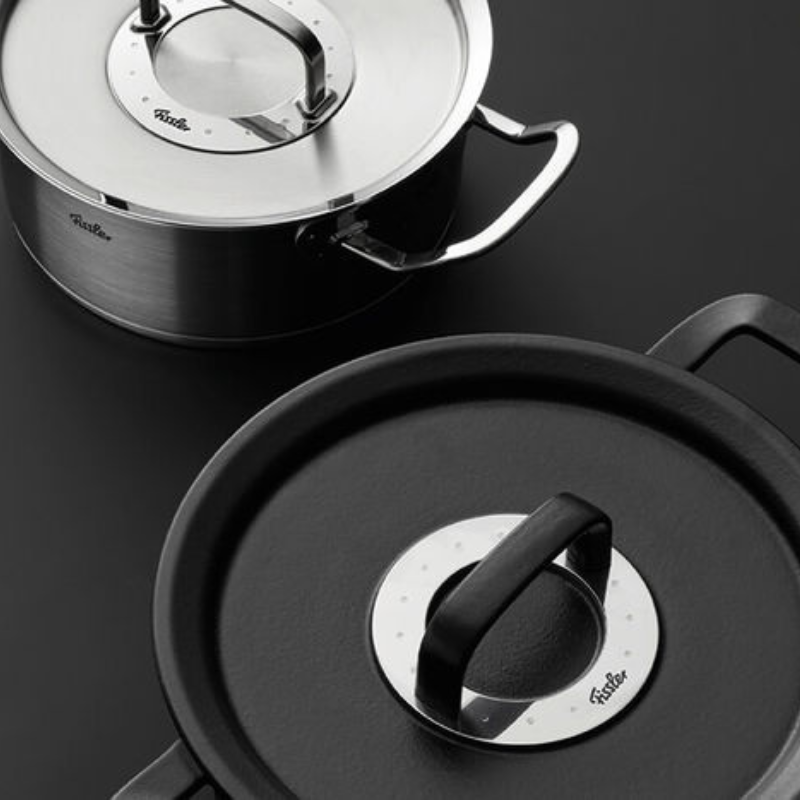
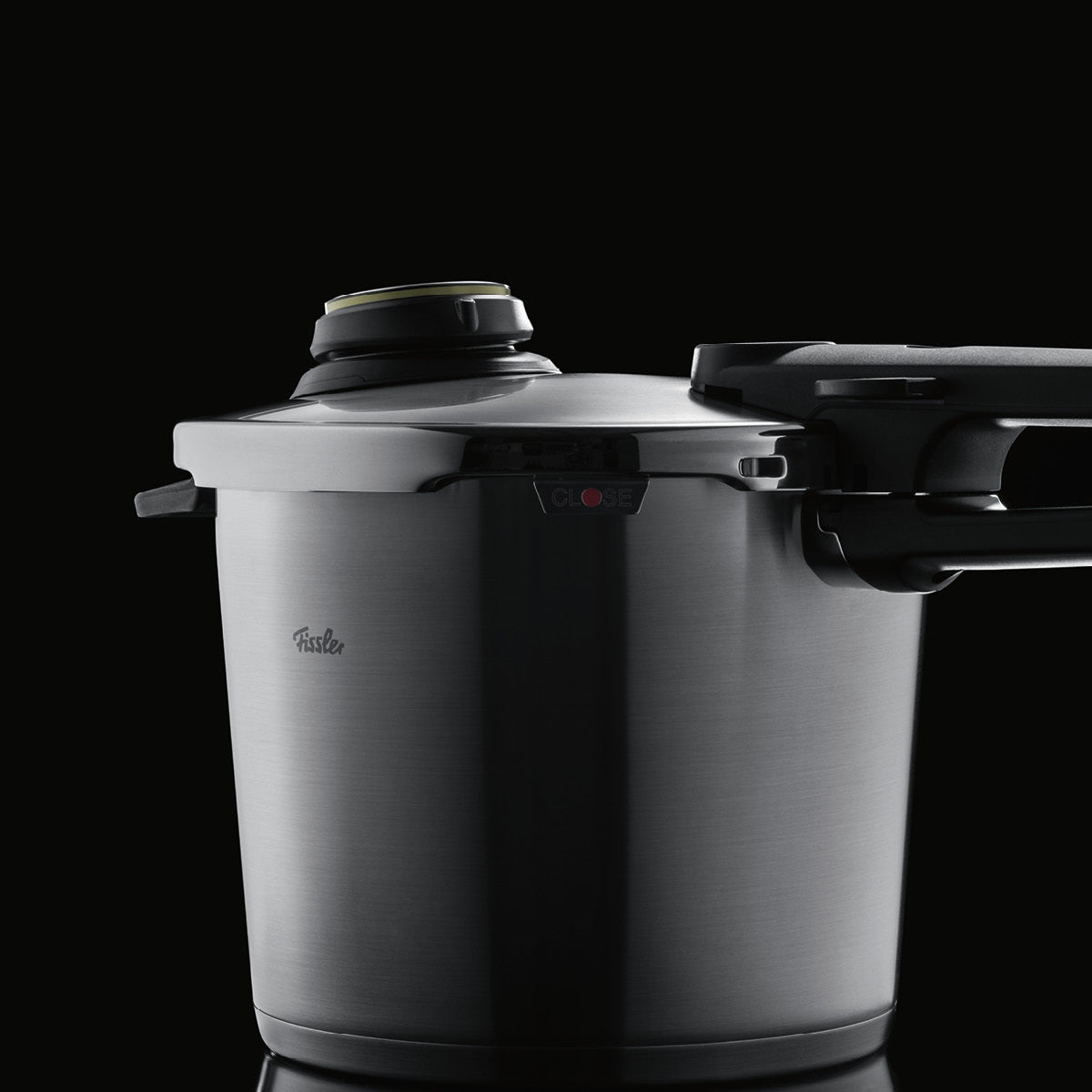
At first glance, the Fissler pressure cooker looks like any other stainless steel pot. The cooking crown on the lid and the unusually shaped handle are the first hints of the sophisticated technology hidden behind the modern design. But how does a pressure cooker work, and what happens after the lid is closed? We answer the most important questions about the pressure cooker principle.

How does pressure build up in a pressure cooker?

The pot body and lid of the pressure cooker are tightly sealed by a locking mechanism and a sealing ring in the lid. When a minimum amount of liquid is added to the pot, some of the water evaporates during cooking. This steam forces oxygen, which is harmful to vitamins, out through the vent valve (Euromatic). Once the air has escaped, the Euromatic closes, sealing the pot hermetically. Because the steam can no longer escape, higher pressure builds up inside the pot.

How is safety ensured during pressure steam cooking?

Modern Fissler pressure cookers feature various automatic safety devices. For example, pressure can only build up once the pot is properly closed – indicated by a visual and audible locking signal on the handle. This activates the safety systems, which automatically limit the pressure inside the pot or ensure that the pot can only be opened when there is no overpressure. Furthermore, users can monitor the pressure themselves using the indicator light on the pressure regulator and reduce it by lowering the temperature or manually releasing the steam.

What is the difference between pressure steam cooking and steam cooking?

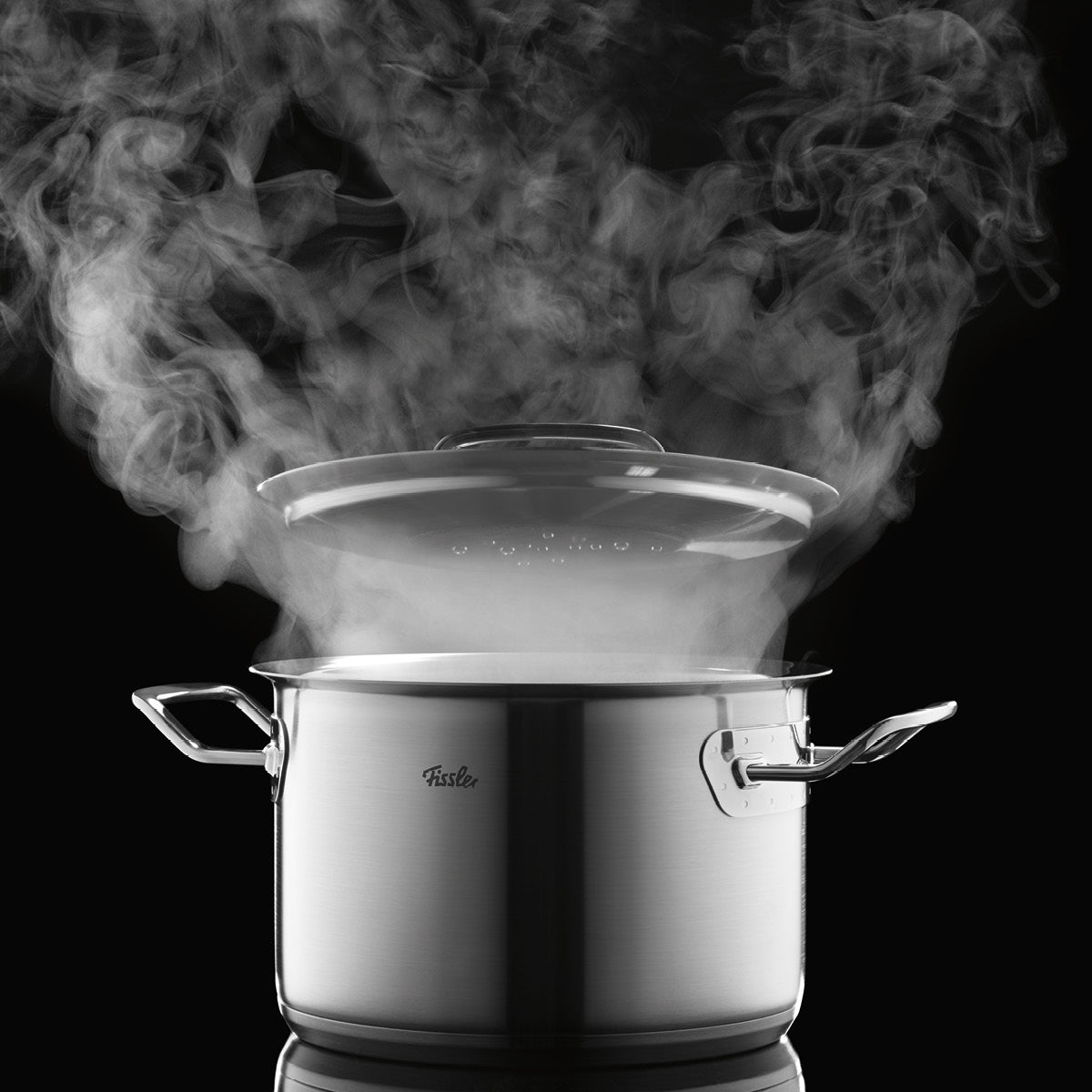
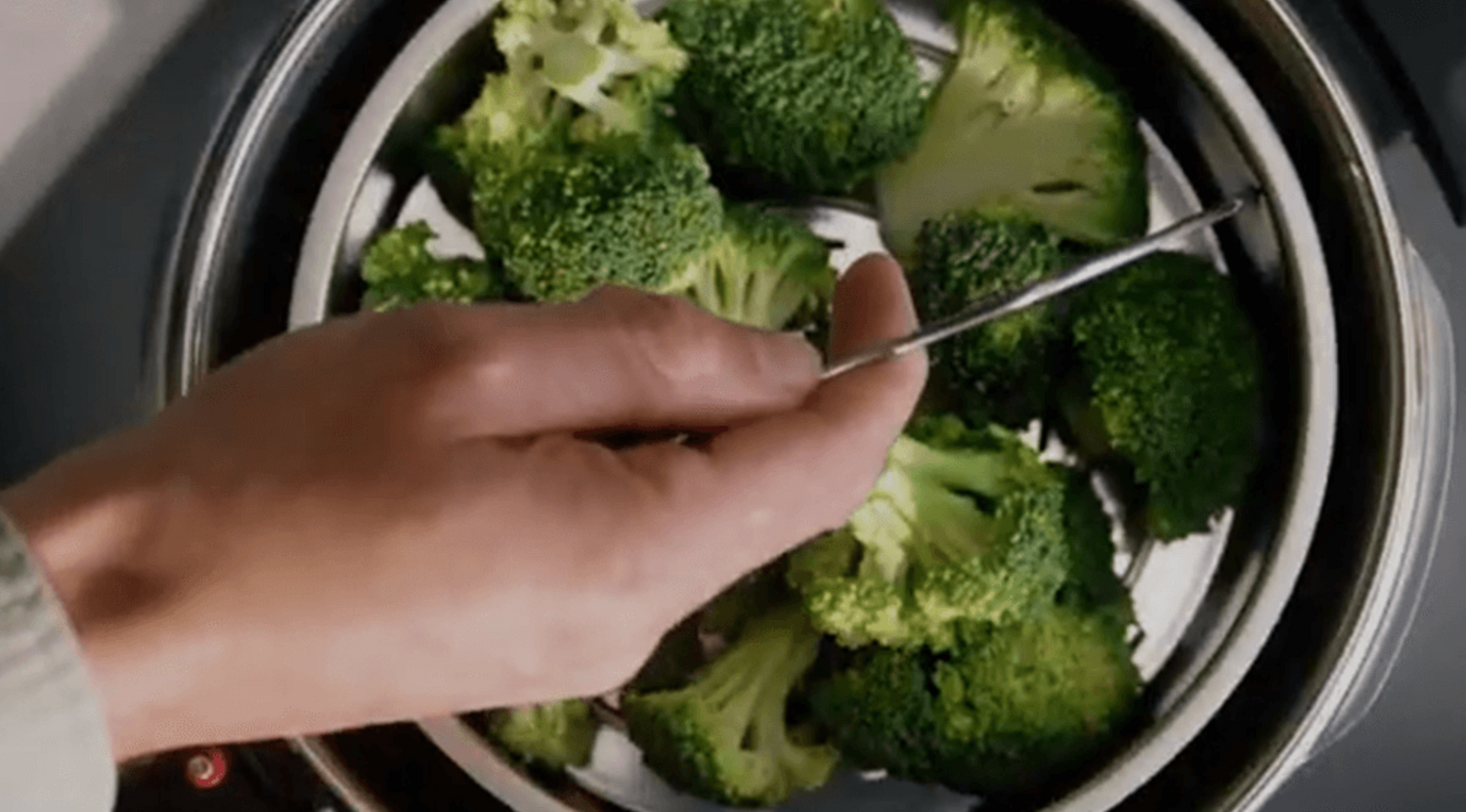
While pressure cooking involves building up pressure, steam cooking occurs at ambient pressure, i.e., "without pressure," as the steam escapes through the steamer crown. Food is cooked particularly gently in the steam of boiling water, at 100°C. In a pressure cooker, steam cooking without pressure is only possible with an additional steam setting and an insert – thus replacing a separate steamer. The cooking time is the same as with conventional cooking.